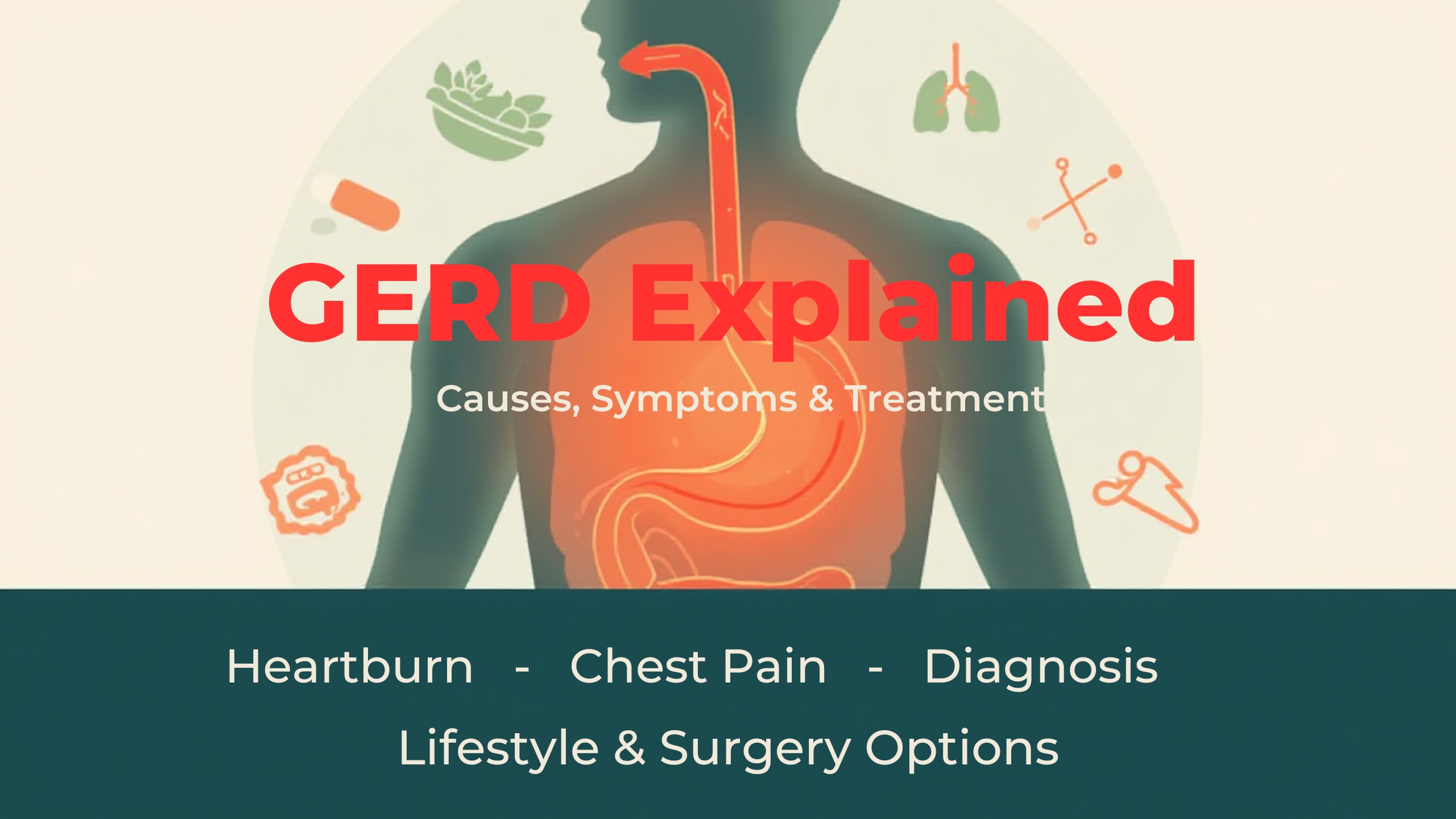
GERD (Acid Reflux): Causes, Symptoms, Diagnosis & When Surgery Is Needed
GERD (Acid Reflux): Causes, Symptoms,
Diagnosis & Treatment Options
Gastroesophageal Reflux Disease (GERD), commonly known as acid reflux, is one of
the most frequent digestive disorders seen today. It affects people of all age groups and
is strongly linked to modern lifestyle habits such as irregular eating patterns, obesity,
sedentary routines, and increased consumption of oily and junk food.
What is GERD?
GERD occurs when the contents of the stomach — including acid, bile, food, and air
— flow backward into the food pipe (esophagus) and sometimes reach the throat.
Normally, a valve at the junction of the esophagus and stomach (called the GE junction
or lower esophageal sphincter) acts like a one-way gate:
● It opens to allow food into the stomach
● It stays closed to prevent reflux
In GERD, this valve becomes weak or fails, allowing stomach contents to move upward,
causing irritation and symptoms.
Common Symptoms of GERD
GERD can present with typical acidity symptoms as well as throat and respiratory
complaints.
Typical symptoms
● Burning sensation in the chest (heartburn)
● Chest pain (sometimes severe enough to mimic a heart attack)
● Feeling of heaviness or discomfort in the chest
● Frequent burping or belching
Throat & respiratory symptoms
● Throat pain or burning
● Persistent dry cough
● Night-time cough or worsening asthma
● Sinus issues
● Bad breath (halitosis)
Is Occasional Acid Reflux Normal?
Yes. Almost everyone experiences occasional reflux, especially after:
● Very oily or deep-fried meals
● Skipping meals and binge eating later
● Late-night heavy dinners
However, reflux becomes a medical problem when symptoms:
● Occur frequently (more than a few times a month)
● Happen daily
● Disturb sleep or quality of life
At this stage, evaluation by a gastroenterologist is important.
How is GERD Diagnosed?
1. Clinical evaluation
Most patients are initially assessed based on symptoms and response to treatment.
2. Upper GI Endoscopy
Endoscopy helps identify:
● Looseness of the GE junction valve
● Hiatus hernia (valve slipping into the chest)
● Esophagitis (acid injury to the food pipe)
● Barrett’s esophagus (a pre-cancerous condition)
● Ulcers, bleeding, or narrowing of the esophagus
3. Advanced tests (in selected cases)
● 24-hour pH-impedance study to measure acid and non-acid reflux
● Barium swallow and esophageal manometry when planning definitive
treatment
Treatment of GERD
GERD is primarily a lifestyle disease, and changes here are crucial:
● Avoid alcohol and smoking
● Eat smaller, frequent meals
● Finish dinner at least 2–3 hours before bedtime
● Avoid tight clothing around the waist
● Maintain a healthy body weight
Foods commonly worsening GERD
● Deep-fried and oily foods
● Coffee and tea
● Citrus fruits and juices
● Chocolate
● Large binge meals
Medical Treatment
The main medications used are Proton Pump Inhibitors (PPIs), which reduce stomach
acid and provide symptom relief.
Important to note:
● PPIs reduce acid but do not completely stop bile or food reflux
● Long-term continuous use is not advisable without medical supervision
● Many patients do well with short-term or on-demand therapy
Persistent symptoms despite medication require further evaluation.
When is Surgery Needed for GERD?
GERD surgery is not meant for everyone. Success depends on careful patient
selection after thorough evaluation.
Surgery may be considered when:
● Symptoms recur immediately after stopping medication
● There is significant food or fluid regurgitation
● A large hiatus hernia or weak valve is present
● GERD is proven and poorly controlled with medicines
Laparoscopic Anti-Reflux Surgery
In selected patients, laparoscopic fundoplication:
● Restores the valve mechanism
● Corrects hiatus hernia
● Provides long-term or permanent relief
● Involves a short hospital stay and quick recovery
When done in the right patient, surgery can permanently cure GERD.
New Endoscopic Treatments
Emerging endoscopic techniques such as GERD-X and ARMS procedures are being
developed. While promising, these are still under evaluation and are not yet standard
treatments.
Final Word
GERD is common — but persistent acid reflux is not normal. Most patients improve
with lifestyle changes and proper medication. For carefully selected patients,
minimally invasive surgery offers a definitive solution.
The key lies in accurate diagnosis, proper evaluation, and choosing the right
treatment for the right patient.