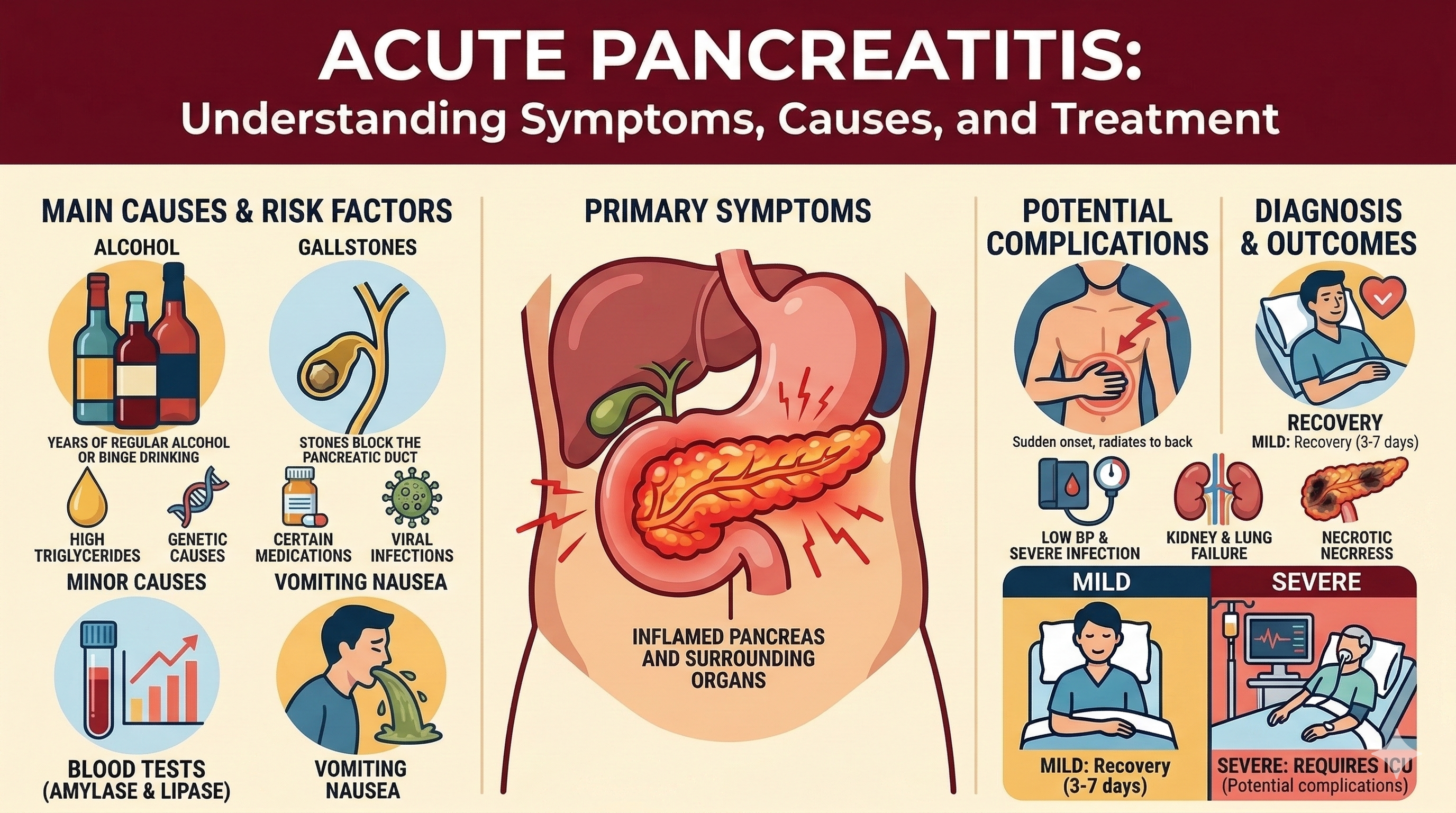
Acute Pancreatitis: Symptoms, Causes, Treatment & When It Becomes Dangerous
What Is Acute Pancreatitis?
Many patients come to me with a simple but worrying question:
“Doctor, what exactly is pancreatitis? Is it dangerous?”
Pancreatitis means inflammation of the pancreas, an important organ located behind the stomach that plays a crucial role in digestion and blood sugar control.
The pancreas produces digestive enzymes that help break down food. But when pancreatitis occurs, these enzymes start damaging the pancreas itself, causing severe inflammation and pain.
Acute pancreatitis can range from a mild illness that resolves within a few days to a life-threatening condition requiring intensive care.
Mild vs Severe Pancreatitis: Understanding the Difference
Doctors usually classify acute pancreatitis into two types based on severity.
Mild Acute Pancreatitis
Mild pancreatitis is the most common form of the disease.
In this condition:
• The inflammation is limited to the pancreas
- • The body gradually recovers within 3 to 7 days
- • Long-term damage is uncommon
Patients may experience symptoms such as:
• Severe upper abdominal pain
• Vomiting • Abdominal bloating
• Loss of appetite
Most patients with mild pancreatitis improve with supportive treatment and observation in the hospital.
Severe Acute Pancreatitis
Severe pancreatitis is a serious and potentially life-threatening condition.
In severe cases:
• Pancreatic tissue may start dying (pancreatic necrosis)
• Digestive enzymes leak into the bloodstream
• Inflammation spreads throughout the body
This can lead to major complications, such as:
• Low blood pressure
• Kidney failure
• Lung failure
• Severe infections
• Heart complications
Many patients with severe pancreatitis require ICU care and long hospital stays.
Studies show that severe pancreatitis may have a 20–30% risk of death, especially if complications develop.
What Causes Acute Pancreatitis?
Research shows that nearly 90% of pancreatitis cases occur due to two main causes.
1. Alcohol Consumption
Long-term alcohol use is one of the leading causes of pancreatitis.
Pancreatitis can occur after the following:
• Years of regular alcohol consumption
• Heavy binge drinking within a short period
Even a few episodes of excessive alcohol intake can trigger inflammation of the pancreas.
1. Gallstones
Gallstones are another very common cause.
Small stones or sludge from the gallbladder may block the pancreatic duct. This blockage prevents digestive enzymes from flowing normally and triggers pancreatitis.
In many patients, removal of the gallbladder may be necessary to prevent recurrent attacks.
Other Causes of Pancreatitis
Although alcohol and gallstones are responsible for most cases, pancreatitis can also occur due to several other conditions.
High Triglycerides
Very high triglyceride levels in the blood can cause inflammation of the pancreas.
High Calcium Levels
Certain conditions, such as parathyroid gland tumours, can increase calcium levels in the blood, which may trigger pancreatitis.
Genetic Causes
Some people are genetically predisposed to pancreatitis due to mutations in genes such as:
• CFTR
• SPINK1
• PRSS1
These individuals may develop recurrent pancreatitis attacks.
Structural Abnormalities of the Pancreas
Certain congenital abnormalities, like:
• Pancreas divisum
• Annular pancreas
can increase the risk of pancreatitis.
Certain Medications
Some drugs may rarely cause pancreatitis, including:
• Steroids
• Azathioprine
Viral Infections
Some viral infections, including dengue and other febrile illnesses, may occasionally trigger pancreatitis.
Symptoms of Acute Pancreatitis
The most common symptom is severe abdominal pain.
Patients typically describe the pain as:
• Sudden onset
• Severe and persistent
• Located in the upper abdomen
• Radiating to the back
Other symptoms may include:
• Persistent vomiting
• Abdominal bloating
• Difficulty breathing
• Extreme fatigue
If these symptoms occur, immediate medical evaluation is necessary.
Complications of Severe Pancreatitis
Complications generally occur in two stages.
Early Complications (First Two Weeks)
During the early phase, severe inflammation can affect multiple organs.
Possible complications include the following:
• Low blood pressure
• Kidney failure
• Lung failure
• Severe infection
• Requirement for ventilator support
This stage can be life-threatening if not managed in intensive care.
Late Complications (After Two Weeks)
Later complications may include:
• Pancreatic fluid collections
• Pancreatic pseudocysts
• Walled-off pancreatic necrosis
• Infection of dead pancreatic tissue
Patients may develop symptoms such as:
• Persistent fever
• Severe abdominal pain
• Jaundice
• Internal bleeding
These complications may require advanced endoscopic or minimally invasive surgical procedures.
How Is Acute Pancreatitis Diagnosed?
Doctors use a combination of tests to confirm the diagnosis.
Blood Tests
Two important enzymes are measured:
• Amylase
• Lipase
Very high levels of these enzymes usually indicate pancreatitis.
However, mild elevation alone does not always confirm pancreatitis, as these enzymes can rise in other conditions like infections or food poisoning.
Ultrasound Scan
Ultrasound is useful for detecting:
• Gallstones
• Gallbladder abnormalities
However, it may not always clearly visualise the pancreas due to gas in the abdomen.
CT Scan (Contrast CT of the Abdomen)
A contrast-enhanced CT scan is the most important imaging test.
It helps doctors determine:
• Severity of pancreatitis
• Pancreatic damage
• Presence of infection
• Complications such as necrosis or fluid collections
Treatment of Acute Pancreatitis
Treatment depends on the severity of the condition.
Early Phase Treatment
During the first two weeks, treatment focuses on supportive care.
Doctors may provide:
• Intravenous fluids
• Pain control
• Oxygen therapy
• Ventilator support if necessary
• Dialysis for kidney failure
• Nutritional support through feeding tubes or IV nutrition
Currently, there is no medicine that can instantly cure pancreatitis.
The body must recover while doctors support vital organ functions.
Treatment of Complications
If complications develop later, advanced procedures may be required, such as:
• Endoscopic drainage of pancreatic collections
• Laparoscopic procedures
• Minimally invasive removal of dead pancreatic tissue
• ERCP to remove gallstones
• Angiography to control bleeding
Why Severe Pancreatitis Requires a Team of Specialists
Severe pancreatitis is a complex disease and requires multidisciplinary management.
Treatment often involves a team that includes:
• Surgical gastroenterologists
• Medical gastroenterologists
• ICU specialists
• Dietitians
• Interventional radiologists
This coordinated approach greatly improves survival and recovery.
Can Pancreatitis Be Prevented?
In many cases, pancreatitis can be prevented by addressing the underlying cause.
Preventive measures include:
• Avoiding alcohol consumption
• Treating gallstones early
• Controlling triglyceride levels
• Managing calcium disorders
• Reviewing medications that may trigger pancreatitis
Once the cause is corrected, many patients never experience another episode.
Does Pancreatitis Cause Diabetes?
Mild pancreatitis rarely causes diabetes.
However, chronic pancreatitis or severe pancreatic damage can reduce insulin production and lead to diabetes.
Does Pancreatitis Increase Cancer Risk?
Acute pancreatitis itself does not directly cause cancer.
However, patients with chronic pancreatitis have a higher risk of pancreatic cancer compared to the general population.
Diet After Pancreatitis
During hospitalisation, diet is carefully managed by doctors.
Patients may receive:
• Liquid diet
• Tube feeding
• IV nutrition if required
After recovery:
• Alcohol should be avoided if it triggered pancreatitis
• Excessively oily and fatty foods should be limited in severe cases
Most patients with mild pancreatitis can return to a normal diet after recovery.
Final Advice for Patients
Acute pancreatitis is a condition that should never be ignored.
Most patients recover completely if treated early, especially in mild cases.
However, severe pancreatitis can become life-threatening, requiring intensive care and expert treatment.
If you experience sudden severe abdominal pain with vomiting, seek medical attention immediately.
Early diagnosis and proper treatment can save lives.